
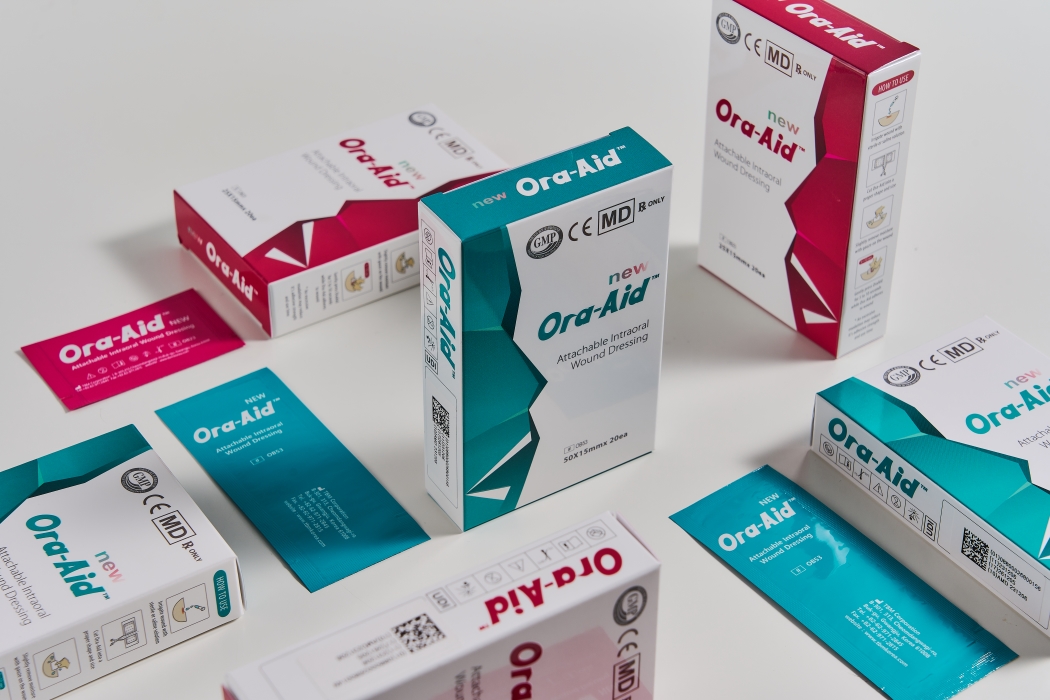
Ora-Aid Intraoral Patches and Their Role in Supporting the Hemostasis Process
.jpg)
One of the most critical challenges in dental surgeries is bleeding control. Poor management can lead to reduced visibility for the surgeon, extended procedure time, and postoperative complications. Hemostats play a vital role in managing bleeding effectively, contributing to patient safety and improving surgical outcomes. This article reviews the types, mechanisms, and clinical uses of hemostatic agents in dental procedures.
A hemostat refers to tools and methods used to control bleeding. In dentistry, this term typically applies to materials applied topically to surgical sites to accelerate clotting and stop bleeding. Hemostasis is the physiological process that stops bleeding and leads to clot formation.
Effective bleeding control is crucial for treatment success and patient safety. Disruptions in hemostasis can cause complications such as swelling, pain, infection, hematoma, delayed healing, and systemic risks in susceptible patients.
Key Points:
Surgical Visibility: Bleeding obstructs the operative field, especially in delicate procedures like gum surgery or implant placement. Effective bleeding control ensures better visibility and reduces the risk of injuring vital structures.
Infection Prevention: Active bleeding can promote bacterial growth. Prompt control reduces the risk of infection.
Tissue Healing: Clot formation initiates healing. A stable clot serves as a matrix for tissue regeneration.
High-Risk Patients: Patients with coagulopathies, diabetes, cardiovascular disease, or on anticoagulants (e.g., warfarin, aspirin) require strict bleeding management.
Patient Comfort: Less intra- and postoperative bleeding leads to greater comfort and satisfaction.
Anemic Patients: Even minor blood loss can be problematic. Careful planning and use of effective topical agents are essential.
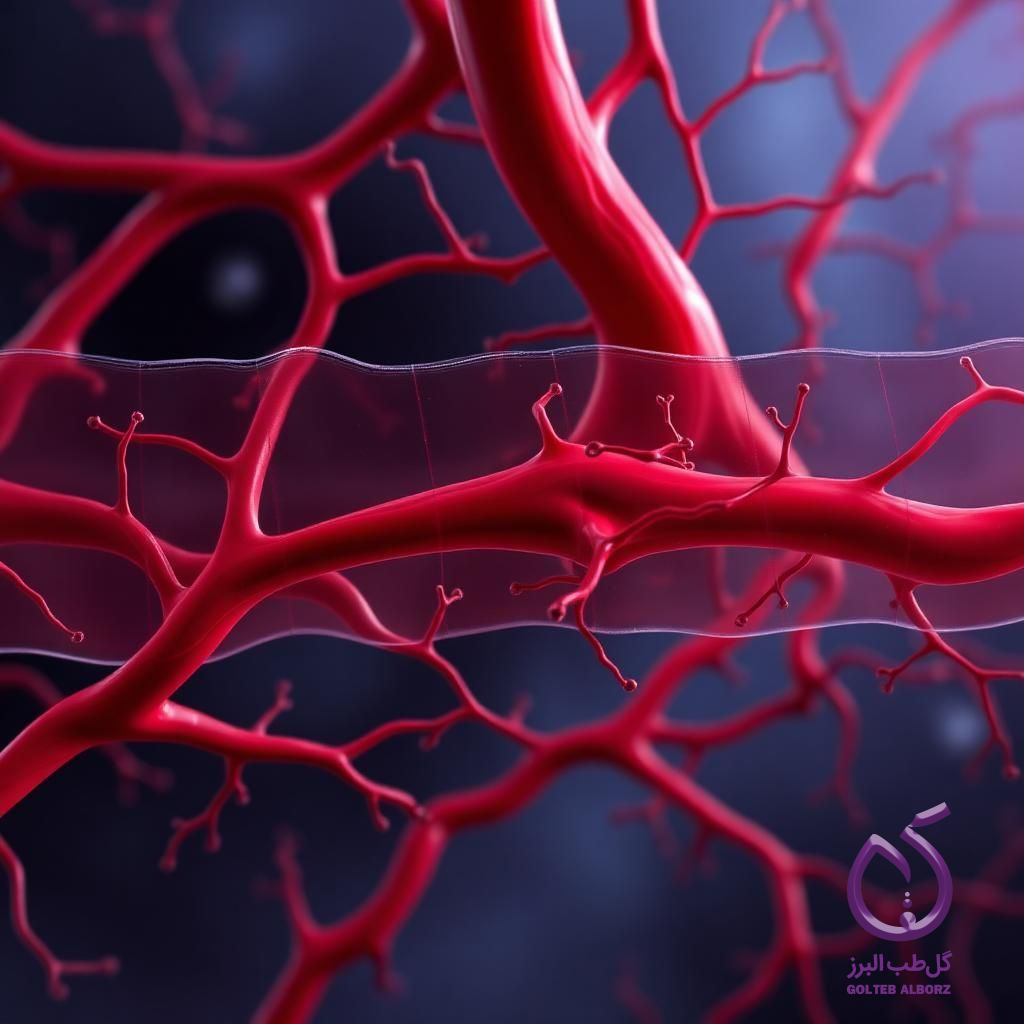
Sterile metal instruments used to temporarily compress vessels or tissues to stop bleeding during surgery.
.jpg)
Structure & Function:
Resemble scissors with narrow, serrated tips for a secure grip.
Equipped with ratchets to lock in position.
Common Types:
| Type | Features | Usage |
|---|---|---|
| Kelly Clamp | Straight or curved, serrated half-blade | Medium-sized blood vessels |
| Mosquito Clamp | Smaller, finer blades | Small vessels, surface tissues |
| Crile Clamp | Serrated along entire blade | Larger vessels |
| Halsted Clamp | Delicate, small | Pediatric or fine oral surgery |
.jpg)
Applications in Dentistry:
Used in maxillofacial surgeries to clamp vessels or hold tissues.
Assist in suturing or bone fracture exposure.
Advantages:
Fast bleeding control
No chemical agents required
Reusable after sterilization
Limitations:
Risk of tissue damage if misused
Not suitable for narrow spaces
Requires surgical skill
Topical agents that promote clotting via vasoconstriction, protein coagulation, or forming a physical barrier.
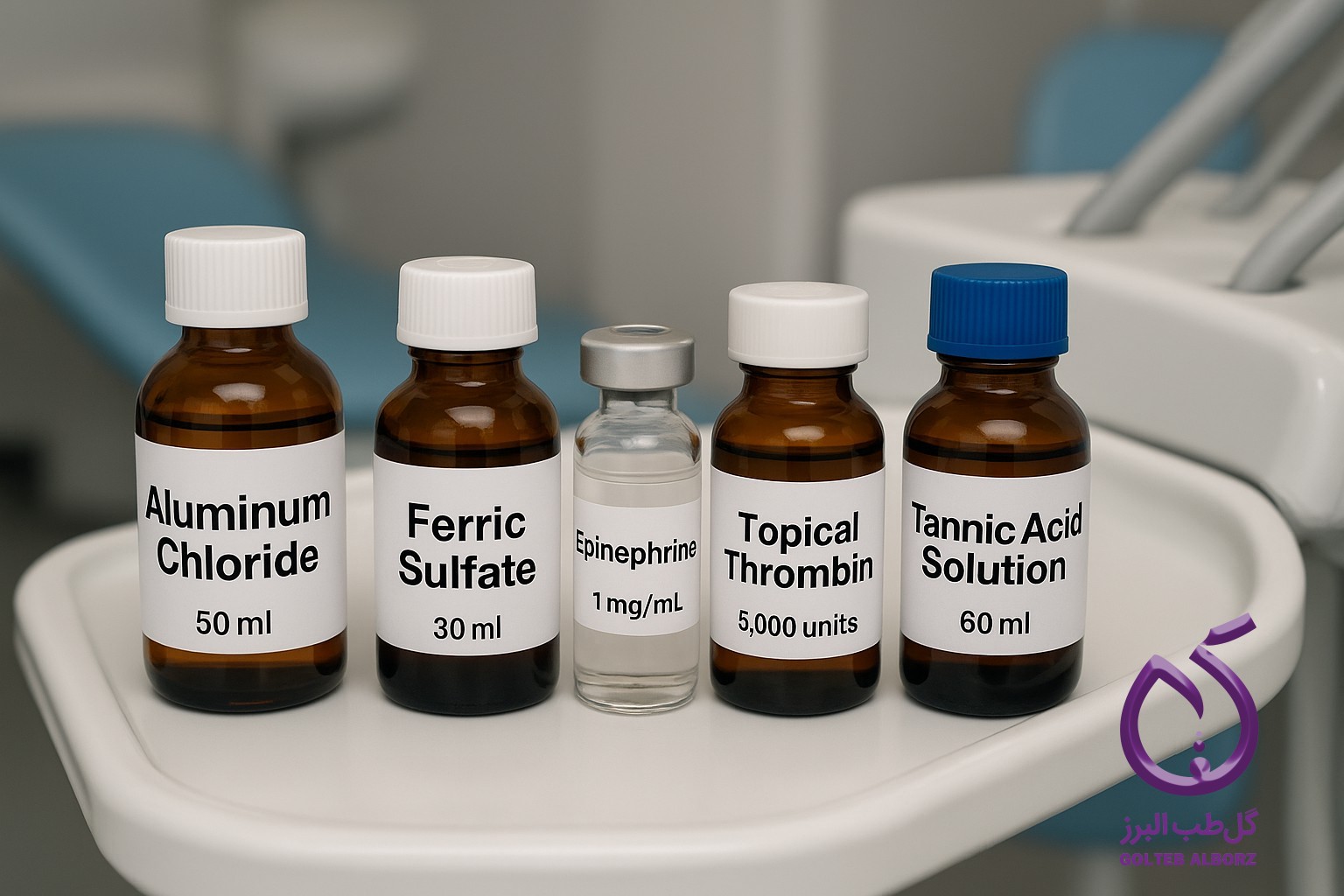
Common Chemical Agents:
Aluminum Chloride (5-25%): Vasoconstrictor, used in gingival surgeries and impression prep. Brands: Hemodent, ViscoStat Clear.
Ferric Sulfate (13%): Rapid protein precipitation, used in Class V restorations. Brands: Astringedent, ViscoStat.
Epinephrine: Strong vasoconstrictor. Caution in cardiac patients.
Chitosan Powders: Natural polysaccharide that accelerates clotting. Brands: HemCon, Celox Dental.
Oxidized Regenerated Cellulose (ORC): Absorbent, antibacterial, forms clot mesh. Brand: Surgicel.
Topical Thrombin: Converts fibrinogen to fibrin. Used in combination with gelatin or powders. Brands: Thrombin-JMI, Recothrom.
Tannic Acid Solution: Astringent with antiseptic properties, limited use.
Pros & Cons:
| Pros | Cons |
|---|---|
| Easy and fast application | Some may discolor teeth or tissues |
| No mechanical pressure needed | Potential interference with adhesives or restoratives |
| Useful in hard-to-reach areas | Use with caution in systemic conditions |
Always rinse hemostatic agents before bonding or restoration.
Combine with mechanical methods for high-risk patients.
Choose based on bleeding severity, site, and patient status.
Blend mechanical, chemical, and biological mechanisms for complex or high-risk cases.
.jpg)
Synergistic Components:
Collagen or gelatin (mechanical matrix)
Ferric sulfate or aluminum chloride (chemical vasoconstrictor)
Human or bovine thrombin (biological clot activator)
Examples:
| Product Name | Components | Features | Usage |
|---|---|---|---|
| Floseal (Baxter) | Gelatin + Thrombin | Fast clotting, effective on active sites | Complex oral/maxillofacial surgery |
| Surgiflo (Ethicon) | Bovine gelatin + Human thrombin | Stable clot, easy syringe application | Implants, sinus lifts |
| CollaStat | Natural collagen + Thrombin | Platelet activation, clot adhesion | Gingival grafts, bone augmentation |
| Hemoblast Bellows | Chitosan + Thrombin + Gelatin | Deep cavity use, rapid control | Implants, cyst removal |
Benefits:
High efficacy in heavy bleeding
Suitable for high-risk patients
Biocompatible and absorbable
Limitations:
Higher cost
Cold storage needed for some
Potential animal protein allergy
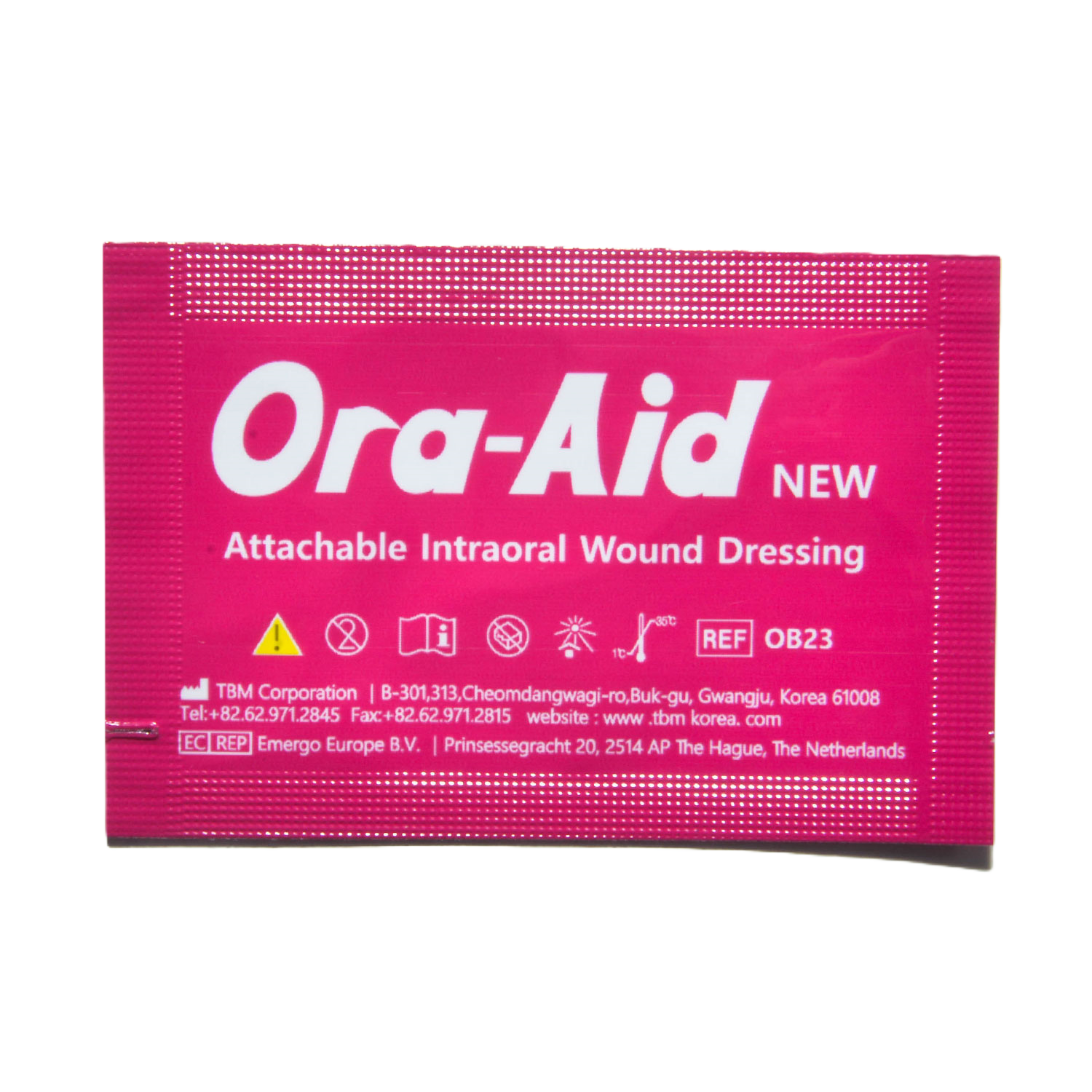
Ora-Aid patches act as protective layers post-application of hemostatic agents. Their dual-layer design shields clots from saliva and tongue movement, supporting clot stabilization and healing. Contains vitamin E for antioxidant and regenerative benefits.
Rinse thoroughly before bonding or restoration
Avoid excessive application to prevent necrosis
Exercise caution in systemic patients
Warn patients about taste or odor if applicable
| Agent | Mechanism | Discoloration | Contraindications | Onset Speed |
|---|---|---|---|---|
| Aluminum Chloride | Vasoconstriction | ❌ No | Low risk | Fast |
| Ferric Sulfate | Protein precipitation | ✅ Yes | Use with caution in restorations | Very fast |
| Epinephrine | Vascular constriction | ❌ No | Cardiac, hypertension, thyroid | Very fast |
| Thrombin | Direct clot formation | ❌ No | Allergy (bovine source) | Very fast |
Tooth Extractions: Prevents post-extraction bleeding
Periodontal Surgeries: Controls bleeding in flap and graft procedures
Implantology: Maintains visibility and reduces complications
Bone Grafting/Sinus Lift: Essential in complex bone surgeries
.jpg)
Benefits:
Rapid and effective bleeding control
Reduced infection risk
Enhanced surgical visibility
Improved tissue healing
Limitations:
Allergic reactions possible
Selection requires clinical judgment
Residual material may cause complications
Hemostats are essential tools in dental surgeries for ensuring bleeding control and patient safety. Proper selection and usage tailored to the clinical scenario can improve surgical success and reduce complications. With comprehensive understanding, dentists can optimize outcomes using these critical agents.