
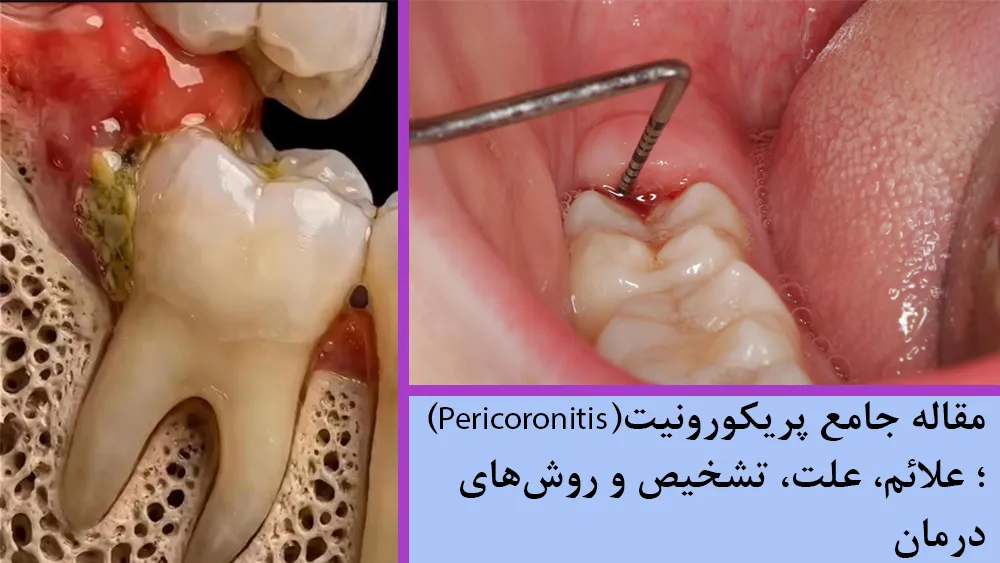
What Is Pericoronitis?
Pericoronitis is an inflammatory condition affecting the soft tissues surrounding the crown of a tooth that has not fully erupted into the mouth. It most commonly occurs around wisdom teeth, particularly mandibular wisdom teeth, because their position and limited accessibility can make the area difficult to clean properly.
When a tooth erupts only partially, part of its crown may remain covered by a layer of gum tissue. This tissue, known as the operculum, creates an area where dental plaque, food debris, and oral bacteria can accumulate. The build-up of these materials may cause localized inflammation and, in some cases, infection.
Pericoronitis may cause pain, redness, swelling, and tenderness of the gum tissue. In more severe cases, bad breath, pus discharge, difficulty opening the mouth, and swallowing problems may also occur. Symptom severity depends on the degree of inflammation, the spread of infection, and the patient's general health.
Importantly, not every partially erupted wisdom tooth causes pericoronitis. However, difficulty maintaining hygiene in the area and repeated food impaction can increase the likelihood of developing the condition.
Anatomy of the Area Affected by Pericoronitis
Two terms are important for understanding this condition:
- Dental crown: The part of the tooth that is normally located above the gumline.
- Operculum: A flap or covering of soft gum tissue that partially covers the crown of an erupting tooth.
The operculum can create a hard-to-access space around the tooth that is difficult to clean with a regular toothbrush. The accumulation of plaque and food debris in this space, together with possible mechanical trauma from contact with the opposing tooth, are among the main factors contributing to inflammation.
Inflammation limited to the operculum is sometimes called operculitis. The term pericoronitis is generally used to describe inflammation of the tissues surrounding the crown of a tooth.
Which Teeth Are Most Commonly Affected by Pericoronitis?
Pericoronitis is most commonly associated with third molars, or wisdom teeth. Wisdom teeth usually erupt in late adolescence or early adulthood. Because there may not be enough space in the jaw, they may erupt only partially or at an unfavorable angle.
In these circumstances, part of the crown is visible in the mouth while another part remains beneath the gum tissue. This can make the area around the tooth difficult to clean and increase the risk of inflammation and infection.
However, pericoronitis is not limited to wisdom teeth. In certain circumstances, it can also occur around other erupting teeth.
What Causes Pericoronitis?
Pericoronitis usually develops when microorganisms and food debris accumulate in the space beneath the operculum. Several factors may contribute to the onset or worsening of the condition.
1. Accumulation of Dental Plaque and Food Debris
The space beneath the operculum is difficult to clean thoroughly and may collect dental plaque and food particles. In this environment, normal oral bacteria, including anaerobic species, may contribute to inflammation and infection.
2. Partial Eruption or Impaction of a Wisdom Tooth
Insufficient space in the jaw or an unfavorable tooth position may prevent the tooth from erupting fully. As a result, part of the crown remains beneath the gum tissue, creating an area where plaque can accumulate.
3. Trauma from the Opposing Tooth
In some patients, the opposing tooth contacts the operculum when the jaws close or during chewing. This contact can cause injury, mechanical irritation, and worsening inflammation. Continued trauma in the presence of dental plaque may make healing more difficult.
4. Difficulty Maintaining Oral Hygiene
The posterior position of wisdom teeth and limited access to the surrounding area make effective cleaning difficult. If plaque remains in this area continuously, the risk of persistent or recurrent pericoronitis increases.
5. Aggravating Factors
A previous infection, underlying medical conditions, a weakened immune system, and circumstances that make oral hygiene difficult may affect the severity or course of the condition. However, pericoronitis is not necessarily caused by immune weakness and can also occur in otherwise healthy people.
Overall, the main contributing factor is the creation of conditions that allow plaque to accumulate and inflammation to develop around the crown of a partially erupted tooth. Mechanical trauma and individual factors may aggravate the condition.
Signs and Symptoms of Pericoronitis
The symptoms of pericoronitis depend on the severity of inflammation and the extent to which infection has spread. In the early stages, a patient may experience only mild discomfort around a wisdom tooth. In acute cases, however, pain and swelling may increase rapidly.
1. Gum Pain and Tenderness
Pain around a partially erupted tooth is one of the most common symptoms. It may worsen during chewing or when the area contacts the opposing tooth. In severe cases, pain may radiate to the ear, jaw, or throat.
2. Gum Redness and Swelling
The tissue surrounding the crown may become red, swollen, and tender to the touch. In some cases, the operculum may be very painful when touched or pressed.
3. Bad Breath and an Unpleasant Taste
The accumulation of food debris and bacterial activity may cause bad breath. Pus discharge may also be associated with an unpleasant or sour taste in the mouth.
4. Limited Mouth Opening
Inflammation involving nearby tissues and the muscles associated with chewing may cause trismus. This symptom is particularly important in severe or spreading cases.
Other Possible Symptoms
In more severe cases, the following signs may also occur:
- Pus discharge from beneath the operculum or formation of a pericoronal abscess
- Swelling of the cheek or tissues surrounding the jaw
- Enlarged and tender lymph nodes beneath the jaw or in the neck
- Fever, general malaise, and reduced appetite
- Difficulty swallowing
The presence of one or more of these symptoms does not necessarily mean that the infection has spread. However, systemic symptoms and progressive swelling require prompt dental assessment. Breathing problems, significant difficulty swallowing, or rapidly increasing swelling of the floor of the mouth or neck may indicate a medical emergency.
Types of Pericoronitis
Clinically, pericoronitis is generally classified into two main forms: acute and chronic. Some patients also experience repeated acute episodes.
Acute Pericoronitis
Acute pericoronitis usually involves a relatively sudden onset of symptoms. The patient may experience significant pain, gum swelling and redness, and tenderness when chewing.
In severe cases, the infection may involve pus formation, limited mouth opening, facial swelling, fever, or lymph node involvement. Assessing the extent of infection at this stage is important when selecting treatment.
Chronic Pericoronitis
In the chronic form, inflammation may be mild and prolonged, and the patient may experience few symptoms. There may occasionally be limited discharge or mild discomfort around the tooth without severe pain.
As food debris accumulates again, inflammation increases, or the patient's general condition changes, the condition may progress to an acute episode.
Recurrent Pericoronitis
In recurrent pericoronitis, acute symptoms return after periods of improvement. If the tooth's position and the operculum continue to allow plaque accumulation, temporary treatment alone may not prevent the condition from recurring.
Repeated episodes are an important factor in deciding on definitive treatment, including whether removal of the wisdom tooth should be considered.
How Is Pericoronitis Diagnosed?
Pericoronitis is diagnosed based on the patient's history, clinical examination, and, when necessary, imaging. The goal is not only to identify inflammation but also to assess the extent of infection, the condition of the tooth, and the possibility of another cause of pain.
1. Patient History
The dentist asks about the location and duration of the pain, symptom severity, previous episodes, the presence of fever or swelling, and any difficulty chewing or opening the mouth. Recurrent symptoms around a partially erupted wisdom tooth may be important for diagnosis and treatment planning.
2. Clinical Examination
The examination assesses the tooth's eruption status, the extent of gum-tissue coverage, redness and swelling, plaque and food debris accumulation, and possible pus discharge. Mouth opening, extraoral swelling, and tender lymph nodes are also evaluated.
When severe pain or limited mouth opening is present, a complete examination of the area may be difficult.
3. Dental Imaging
When indicated, radiographs are used to assess the tooth's position, the degree of impaction, the space available for eruption, its relationship to the adjacent tooth, and the possibility of other problems. A panoramic radiograph or intraoral radiographs may be selected depending on the clinical situation.
Imaging alone cannot establish a definitive diagnosis of pericoronitis. Instead, it helps assess the tooth and plan treatment in conjunction with the clinical examination. Three-dimensional imaging, such as CBCT, is not usually necessary in every case and should be selected according to a specific diagnostic need.
4. Differential Diagnosis
Pain around a wisdom tooth is not always caused by pericoronitis. Several conditions can produce similar symptoms or occur at the same time, including:
- Caries in the wisdom tooth or on the distal surface of the second molar
- Pulpitis or an infection at the root apex
- Food impaction and inflammation of a periodontal pocket
- A periodontal abscess
- Muscular pain and temporomandibular disorders
An accurate differential diagnosis is important because the treatment for each of these conditions may differ.
Treatment Options for Pericoronitis
Treatment depends on the severity of inflammation, the extent of infection, the tooth's eruption status, and the likelihood of recurrence. The main goals are to relieve pain and inflammation, clean the affected area, control infection when present, and prevent the problem from returning.
Treatment is generally considered in two stages: controlling the current symptoms and inflammation, and deciding on a definitive approach to prevent recurrence.
1. Irrigation and Cleaning of the Affected Area
In many cases, the initial treatment involves irrigation and debridement of the area beneath the operculum. Using appropriate techniques, the dentist removes food debris, plaque, and inflammatory discharge from around the tooth.
Depending on the clinical circumstances, saline or other suitable solutions may be used for irrigation. If pus is present and an abscess has formed, drainage may also be necessary.
Local cleaning often helps reduce inflammation and pain and plays an important role in the initial management of the condition.
2. Pain and Inflammation Management
To relieve pain, the dentist may recommend appropriate analgesic or anti-inflammatory medication, taking into account the patient's condition, medical history, current medications, and contraindications.
Alongside professional treatment, gentle rinsing with warm salt water and maintaining oral hygiene may help keep the area clean. Antiseptic mouthwashes, such as chlorhexidine, may also be considered in certain circumstances, with appropriate instructions for use.
These supportive measures do not replace professional examination and cleaning. The area should not be manipulated, squeezed, or drained at home using sharp instruments.
3. Antibiotics: When Are They Necessary?
An important aspect of pericoronitis management is correctly identifying the cases that genuinely require antibiotics.
Antibiotics are not necessary for every case of pericoronitis. When the disease is localized around the tooth, local treatment—including irrigation, debridement, and control of the source of inflammation—is generally the priority.
A dentist may consider prescribing antibiotics in the following situations:
- Fever or signs of systemic infection
- Spread of infection to adjacent tissues, such as cellulitis or diffuse facial swelling
- Significant swelling that persists despite appropriate local measures
- Certain underlying conditions, such as immunodeficiency, that increase the risk of complications
The choice of medication and duration of treatment depend on the patient's clinical condition, history of drug allergies, drug interactions, and recognized treatment guidelines. Antibiotics should not replace cleaning, abscess drainage, or definitive treatment of the source of infection. Self-medication can also cause adverse drug effects and antimicrobial resistance.
4. Addressing Trauma from the Opposing Tooth
If the opposing tooth contacts the inflamed operculum when the jaws close, this trauma may aggravate the inflammation.
In this situation, the dentist should assess the occlusal relationship and tooth positions. In selected cases, adjusting a traumatic contact or treating the opposing tooth may help reduce irritation. However, the appropriate intervention should be selected based on the examination and the predicted future position of the tooth.
5. Operculectomy
Operculectomy is a minor surgical procedure in which the soft tissue covering part of the tooth's crown is removed. The aim is to eliminate the space where plaque can accumulate and provide better access for oral hygiene.
This procedure may be appropriate when the tooth has the potential to erupt and assume a favorable position in the dental arch, and removing the overlying tissue is likely to improve cleaning.
Operculectomy is not suitable for every patient. If the tooth remains unfavorably positioned because of impaction or lack of space, the problem may persist or recur.
6. Wisdom Tooth Extraction
For some patients, removing the tooth responsible for the inflammation is the most effective way to eliminate the source of plaque accumulation and prevent recurrent pericoronitis.
Extraction may be considered in the following circumstances:
- Repeated episodes of pericoronitis
- Impaction or unfavorable tooth position, with little likelihood of functional eruption
- Persistent difficulty maintaining hygiene around the area
- Damage or disease involving the wisdom tooth or adjacent tooth
- Complications that cannot be controlled with conservative treatment alone
Not every case of pericoronitis requires extraction. According to NICE guidance, a first episode that is not particularly severe is not usually, by itself, sufficient reason for surgery. However, second and subsequent episodes should prompt consideration of whether the tooth should be removed. Disease severity, anatomical position, and other dental problems are also important in decision-making.
The timing of surgery should be tailored to the patient's condition and the status of the infection. In some cases, definitive treatment can be performed early; in others, it may be necessary to first control inflammation, limited mouth opening, or other contributing factors.
Possible Complications of Pericoronitis
Many cases of pericoronitis can be controlled with appropriate treatment. However, complications may develop if the condition is left untreated or the infection spreads.
- Pericoronal abscess: A collection of pus in the space surrounding the tooth can cause increasing pain, swelling, and tenderness and may require therapeutic drainage.
- Spread of infection to the facial and neck tissues: In severe cases, infection may extend into adjacent tissue spaces and cause cellulitis or diffuse swelling.
- Trismus: Inflammation involving nearby tissues may restrict mouth opening and make eating, speaking, or dental examination difficult.
- Difficulty swallowing and airway compromise: In rare but dangerous cases, the spread of infection into the deep spaces of the floor of the mouth and neck may impair swallowing and breathing. This situation, including the possibility of Ludwig's angina, requires emergency care.
- Warning signs: Rapid or progressive swelling of the face or neck, difficulty swallowing, changes in the voice, elevation of the floor of the mouth, or breathing problems require immediate assessment. If breathing becomes difficult or the patient cannot swallow saliva, emergency care should be sought immediately rather than waiting for a routine dental appointment.
How Can Pericoronitis Be Prevented?
Preventing pericoronitis mainly involves reducing plaque accumulation and identifying problems related to wisdom-tooth eruption at an early stage.
- Maintain oral hygiene: Carefully clean the back teeth and surrounding gums with an appropriate toothbrush to help reduce plaque accumulation.
- Gently clean beneath the gum flap: Where possible, and with guidance from a dentist, appropriate methods can be used to clean areas that are difficult to reach.
- Attend regular wisdom-tooth examinations: Assessing eruption status, available space, and the health of the adjacent tooth can help identify potential problems earlier.
- Follow up on early symptoms: Pain, redness, swelling, or repeated food impaction around a wisdom tooth should not be ignored.
- Consider definitive treatment for recurrent cases: If inflammation keeps returning, the most appropriate option for addressing the underlying cause should be considered.
Routine preventive removal of all impacted, symptom-free wisdom teeth in the absence of evidence of disease is not generally recommended. The decision to retain, monitor, or surgically remove a tooth should be based on examination, imaging when needed, and an assessment of the risks and benefits for each patient.
Frequently Asked Questions About Pericoronitis
Can pericoronitis resolve without treatment?
Mild symptoms may temporarily subside, but if underlying factors—such as plaque and food debris accumulation or an unfavorable tooth position—remain, recurrence is possible. Dental assessment is recommended for appropriate management.
Does a wisdom tooth always need to be extracted to treat pericoronitis?
No. In mild cases or after a first episode, local treatment and improved hygiene may be sufficient. If the condition recurs, the tooth is unfavorably impacted, or complications develop, extraction may be a more appropriate option.
Can antibiotics alone treat pericoronitis?
Usually not. Local treatment to remove plaque and food debris and control the source of inflammation is essential. Antibiotics are prescribed only when clinically indicated and as part of a treatment plan.
When does pericoronitis require emergency treatment?
Emergency care is necessary if breathing becomes difficult, swallowing is significantly impaired, the floor of the mouth or neck swells rapidly, or progressive swelling causes the patient's condition to deteriorate quickly. Fever, facial swelling, and limited mouth opening also require prompt dental assessment.
Summary
Pericoronitis is a common inflammatory condition associated with the partial eruption of wisdom teeth. It is mainly caused by the accumulation of dental plaque and food debris beneath the operculum. The condition can range from mild, localized inflammation to a severe infection accompanied by swelling, fever, and limited mouth opening.
Accurate diagnosis, local cleaning, pain and inflammation control, and the judicious use of antibiotics when necessary are key elements of management. In patients with recurrent pericoronitis or an unfavorable tooth prognosis, definitive treatment—including operculectomy or wisdom tooth extraction—should be considered.
Ultimately, the choice of treatment should be based on symptom severity, tooth status, the likelihood of recurrence, and the dentist's clinical assessment. This article is intended to provide general information and does not replace a professional examination or diagnosis.
Suggested Scientific References
- Scottish Dental Clinical Effectiveness Programme (SDCEP) — Guidance on managing bacterial infections and pericoronitis, with an emphasis on local treatment and the appropriate use of antibiotics.
- NICE — Guidance on wisdom tooth removal and considerations relating to recurrent pericoronitis.
- Health Service Executive (HSE) — Clinical guidance on pericoronitis, local treatment measures, indications for antibiotics, and signs requiring urgent referral.