
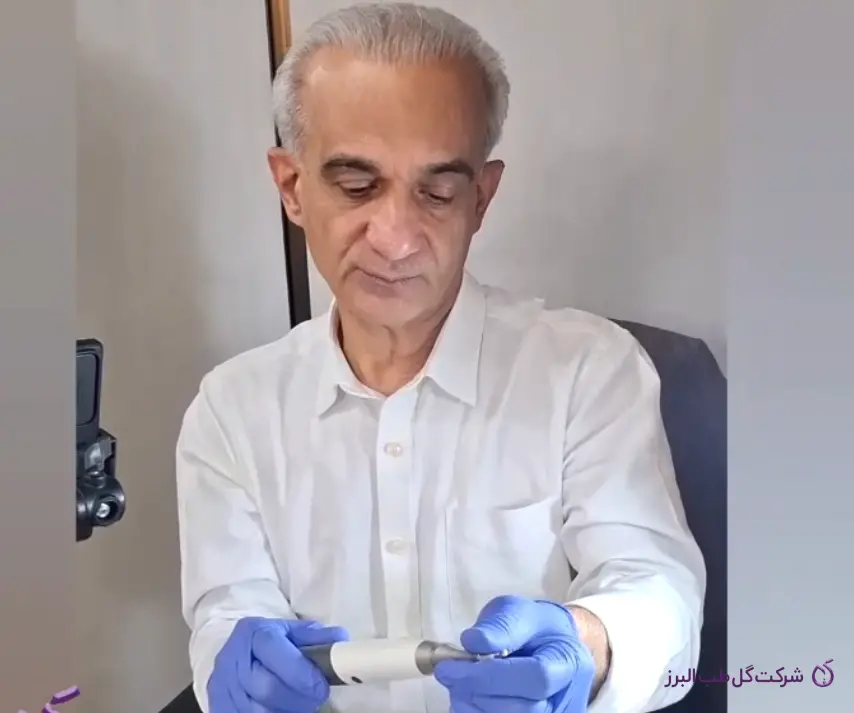
Finger Placement: Initially, place your fingers so that with your thumb, index finger, and middle finger, you firmly grasp the handle of the endomotor. Position your other fingers to maintain complete control over the instrument. Maintaining Balance: Try to place the device in your hand so that its center of gravity rests on the bone of your index finger, allowing you to have perfect balance. This helps you make more precise movements and not feel the weight of the endomotor. Wrist Movement: For more precise movements, use your wrist gently. Slow and soft wrist movements help you have better control over the endomotor. Appropriate Pressure: Apply appropriate pressure on the instrument. Excessive pressure can lead to file breakage. Additional Tips
- Continuous Practice: Continuous practice is essential to master the technique of holding endomotors. The more you practice, the better your control over the instrument becomes.
- Familiarity with Types of Endomotors: Familiarize yourself with different types of endomotors. Each type of these instruments may require a different holding technique. Some endomotors, especially those with ergonomic designs like the i-Bond Plus series, have a completely ergonomic design that transfers minimal fatigue to the dentist during work, in addition to having up-to-date and exceptional facilities.