




.png)
Orthodontic brackets, as essential components of fixed orthodontic appliances, act as intermediaries between the archwire and the tooth surface. Their geometric design, material, ligation mechanism, and three-dimensional positioning determine the efficiency and biomechanics of tooth movement.
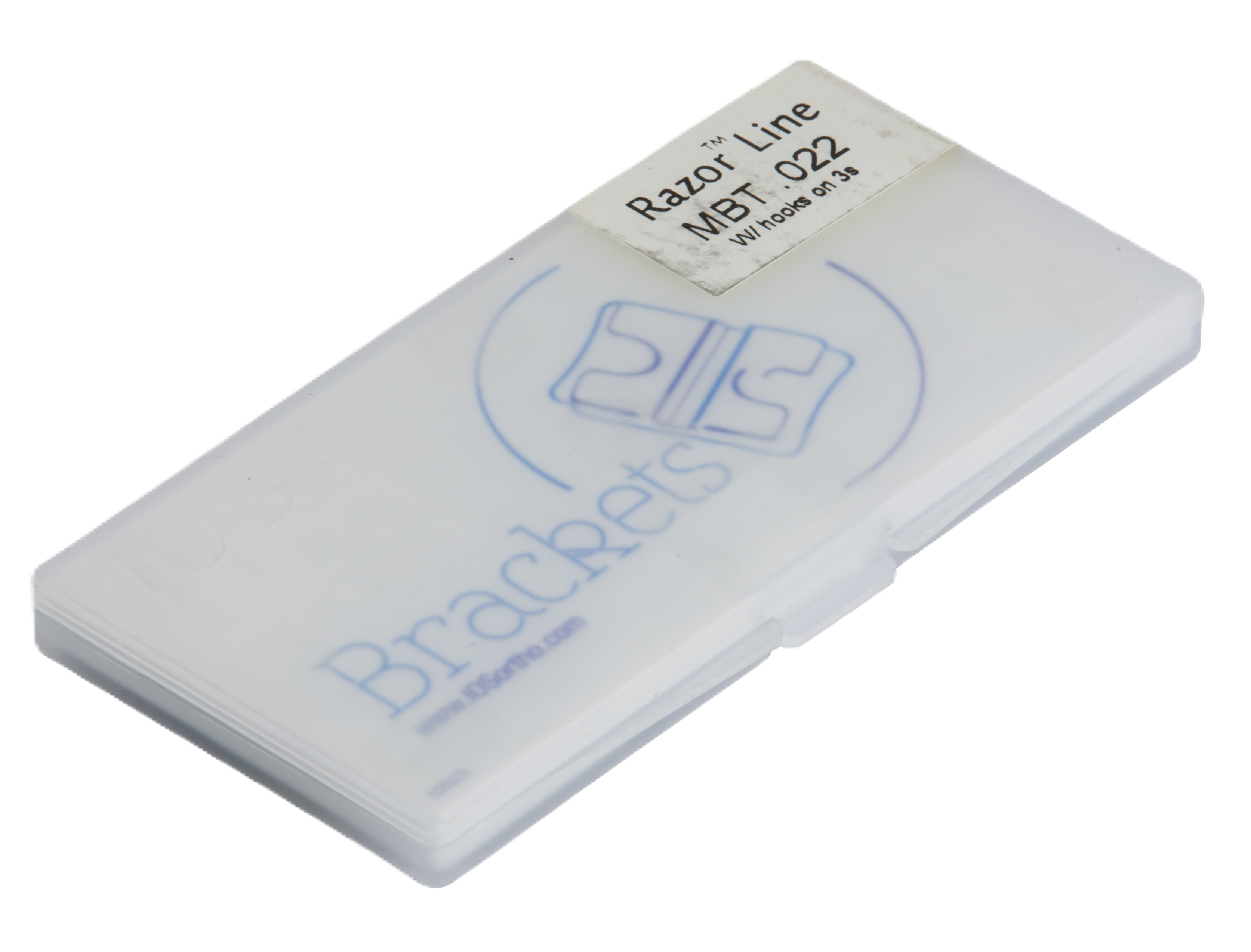
The most common type; made of stainless-steel alloys with high corrosion resistance.
Advantage: lower friction compared to esthetic brackets.
Can include hooks, auxiliary slots, and design variations for improved biomechanical control.
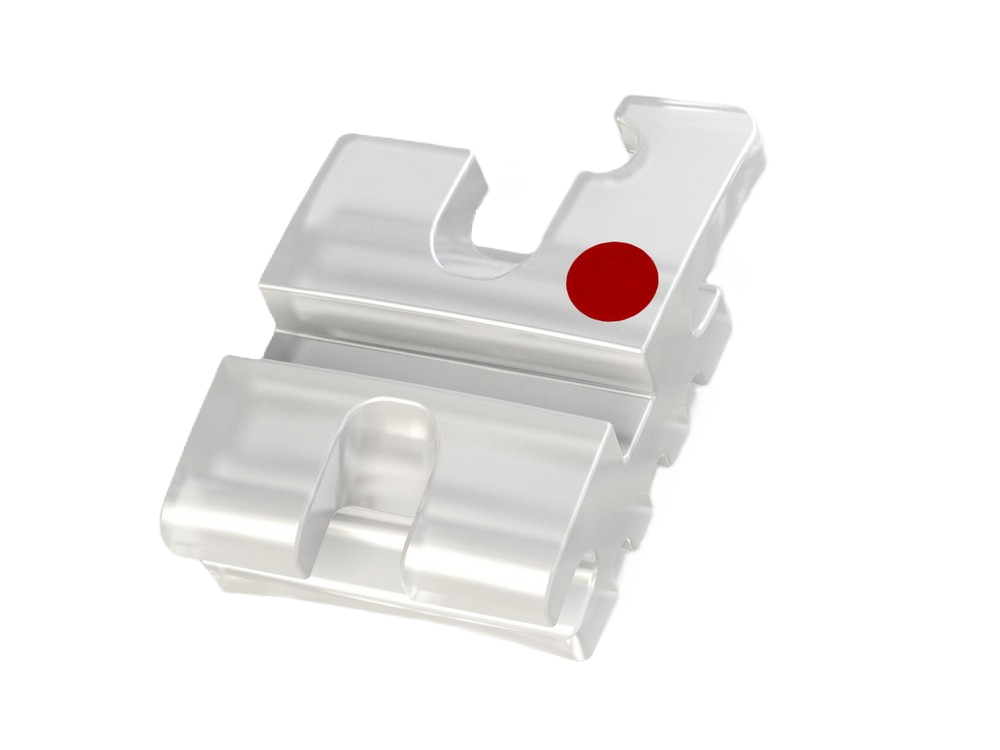
Manufactured from alumina (polycrystalline or monocrystalline).
Superior esthetics but higher friction against stainless-steel wires.
More brittle; higher risk of debonding or enamel fracture during removal.
Highly transparent and more resistant compared to polycrystalline ceramics.
Excellent wear resistance, but friction remains a concern.
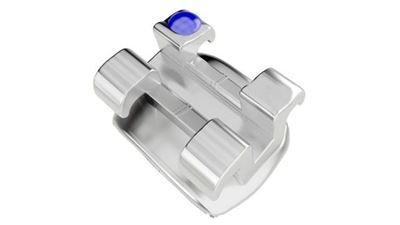
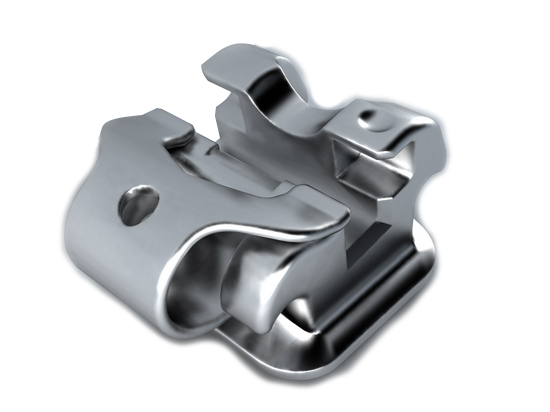
Available in both passive and active designs.
Advantages: reduced friction, potentially improved anchorage control, fewer visits.
Clinical studies: evidence on significant reduction in overall treatment time remains inconclusive.
Bonded to the lingual/palatal surfaces of the teeth.
Provide optimal esthetics (invisible from the front).
Challenges: limited tongue space, speech difficulties, and increased technique sensitivity.
Older generation, rarely used today.
Discoloration and poor mechanical resistance limit their application.
Prescription (Roth, MBT, Andrews) – defines tip, torque, and in-out for each tooth.
Slot Dimension (0.018” vs. 0.022”) – directly influences biomechanical control and finishing.
Base Design – mesh base or chemical retention for improved bonding.
Frictional Characteristics – must align with wire material and ligation type.
Bracket Profile & Size – impacts esthetics and patient comfort.
Bracket selection should match the type of malocclusion, biomechanical requirements, and clinician’s preference.
For adult orthodontics, esthetic brackets (ceramic or sapphire) are often preferred.
For complex movements (rotation, torque control), metal or self-ligating metal brackets are usually more effective.
Lingual brackets are recommended for patients with absolute esthetic demands but require advanced skills and CAD/CAM customization.
Digital/Customized Brackets designed via CAD/CAM.
Hybrid systems combining metal and ceramic brackets.
Advances in nano-coating and surface treatments to reduce friction and improve biocompatibility.